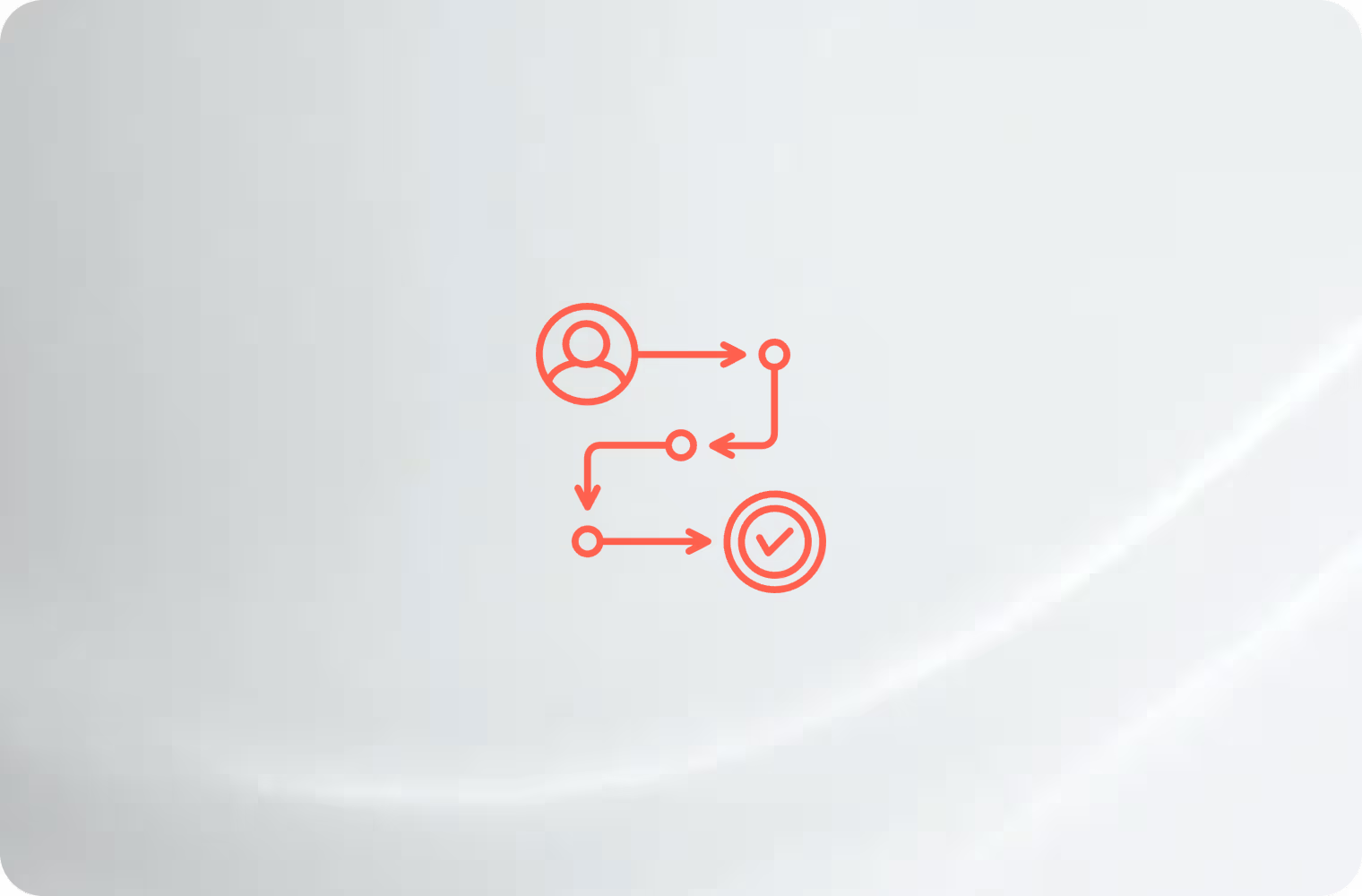

When a payment fails, a whole chain of actions begins: identify the unpaid premium, contact the policyholder, re-present the payment, track due dates, send a formal notice and, if needed, suspend or cancel the policy.
Every step takes up the operations team’s time and has to be carried out rigorously. As the portfolio grows, the number of actions rises and follow-up gets harder.
Automating collection brings structure to this process. Korint now triggers and runs a dunning workflow as soon as a SEPA direct debit or card payment fails. Each organisation configures its own rules: retry schedule, communications, late-payment fees and escalation steps.
From failed payment to settlement: an automated workflow
Automated dunning orchestrates the whole collection journey from a single event: a failed payment.
Korint then opens a workflow attached to the policy concerned. The platform applies the sequence the organisation has defined:
- a new payment attempt is launched;
- the planned communications are sent;
- late-payment fees are added, where applicable;
- internal teams are notified;
- the configured escalation steps are triggered;
- the workflow stops automatically as soon as the invoices are paid.
The payment can be collected directly on the platform or recorded manually once a cheque or bank transfer has been received. Either way, Korint detects the settlement and closes the workflow.
A workflow that follows each organisation’s rules
Every insurer, MGA or wholesale broker has its own operating rules. The collection workflow has to reflect them.
Teams define, among other things:
- the failure reasons that trigger a new attempt;
- the number and frequency of attempts;
- the payment methods covered, such as SEPA direct debit or card;
- the amount of the late-payment fee;
- the emails sent to the policyholder or to internal teams;
- the schedule for notifications and escalation steps.
If the premium remains unpaid, the workflow can then move on to a formal notice, a suspension or a cancellation, according to the rules the organisation has approved.
This configuration turns internal procedures into an automated operational workflow. Teams apply the rules the same way, whatever the volume of policies to handle.
What it changes for each party
The benefit goes beyond saving time: it spreads across the whole value chain, from the policyholder to the risk carrier.
| Party | What changes | Value created |
|---|---|---|
| Policyholder | Regular reminders and a clearer journey | A better chance of paying before a suspension, fewer unintended gaps in cover |
| Distributing broker | Less manual follow-up, better visibility on the status of each file | Time saved and better service quality |
| Wholesale broker, MGA, administrator | Automated attempts, communications and escalation | Lower administration costs and faster collection |
| Insurer, risk carrier | The defined process applied systematically | Tighter risk control and a healthier portfolio |
| Finance, accounting | A filterable view of policies in dunning and of the next planned action | Simpler receivables management and prioritised files |
| Compliance, operations | Actions executed on the configured dates | Fewer oversights and an audit trail that proves the process was applied |
Less workload, more control
With automated dunning, Korint turns a string of manual tasks into a managed workflow, from the first payment retry to contractual escalation. Even as the portfolio grows, every file follows the organisation’s rules, and teams can focus on the cases that genuinely need their expertise.
The feature will be available soon on the Korint platform. Want to see how it fits your operating rules? Our team is happy to give you a demo.